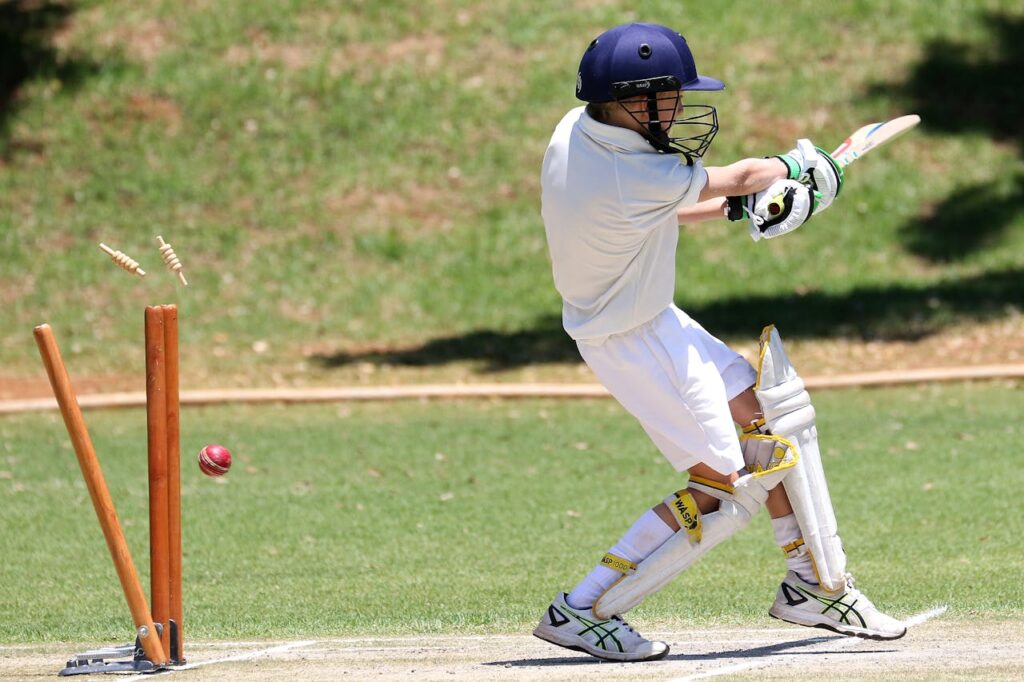


There is a precise sound that tells you a Rohit Sharma century is loading. It comes early, sometimes in the third over, sometimes the sixth. A length ball, not short enough to cut and not full enough to drive. He barely moves. Wrists coil, blade twitches, the bat stays in the V for a beat longer than most, and the ball is gone to the fence with uncommon ease. The baseline has been set. The next ninety runs arrive in beautifully staged pulses: a careful glide, a terse maiden, then a volley of drives that push the field back and force bowlers to blink. Each Rohit Sharma 100 carries that same control, an economy of motion that makes violence look artful.
This piece is built for the supporter who searches Rohit Sharma century, the analyst who breaks down boundary-percentage in his ton-scoring innings, and the fan refreshing a live scorecard with the hope of a Rohit Sharma hundred today. It is a long-form, expert perspective on his centuries across formats and tournaments, without jargon and without shortcuts, reflecting two decades of watching his technique, tempo, and decision-making evolve from a precocious middle-order player to one of the most devastating opening batsmen in modern cricket.
Quick facts: totals and headline records
- International centuries by format (as of the latest update)
- ODI centuries: 31
- Test centuries: 12
- T20I centuries: 5
- Total international centuries: 48
- Signature records
- Highest individual ODI score: 264 (Eden Gardens)
- ODI double centuries: 3 (the most by any batter)
- Most centuries in ODI World Cups: 8 (a standalone record)
- Fastest ODI century by Rohit Sharma: 63 balls (global tournament fixture)
- IPL centuries: 2 (one for Deccan Chargers, one for Mumbai Indians)
- Latest landmark
- Latest international century: a Test century against England in Ranchi during a series-deciding phase.
- Latest T20I century: a masterclass at Bengaluru, a landmark chase that capped a memorable series.
If you prefer the shorthand many fans use: Rohit Sharma total centuries sit at 48 with ODI 31, Tests 12, and T20I 5. For those tracking trends like Rohit Sharma latest century and Rohit Sharma hundred today, those counters adjust here after each milestone.
The Rohit template: how a century from the Hitman is built
There are batters who puncture you with pace, and there are batters who batter you with pace. Rohit does something else. He absorbs. Then he accelerates. The hallmark of a Rohit Sharma century is energy management.
- Starts and sighters
Early in the innings, he prefers picking his battles. Against right-arm pace, he shapes for the pick-up pull, standing tall rather than rolling over it, allowing timing to do the work. If the ball is moving, he tends to leave tighter and later outside off stump than he did in his middle-order days. The first fifteen balls rarely define his day; they simply set the angles. - The trigger to go
The early lofted straight drive is often the tell. When he clears mid-on or mid-off early, he is already ahead of the game. The other tell is the short-arm jab-pull that doesn’t balloon, a flat missile over midwicket that tells the bowler his back-of-a-length option is shut. - Spin control
Versus spin, especially early overs from a left-arm orthodox bowler, he will go back and across, forcing the bowler’s length to drift shorter. He makes a particular meal of that length with the inside-out loft over extra cover. Against leg-spin, he plays square and late, content to milk until the leggie fishes for the fuller, wider ball. That is when the slog-sweep appears. - Middle-overs economy
The purest value of Rohit’s hundred-making is the cost he imposes on captains after the first powerplay. They pull the square boundaries back on both sides, keep a long-off, and push an extra man to the leg side. He responds not with blind hitting but with boundary bursts: two overs of five and six, then six overs of ones and twos. The strike-rate creeps, the score balloons, and fatigue folds bowlers’ lines. - Death-overs punishment
Once he reaches the eighties in ODIs or late fifties in T20Is, he is brutal on length. Yorkers must be perfect; anything else becomes a bat-swing that extends through the line. When he crosses three figures, he rarely stalls. Many Rohit Sharma centuries include a sharp second wind that pushes India far beyond par.
ODI centuries: the engine room of his legacy
Rohit Sharma ODI centuries are a study in controlled aggression. The conversion rate exploded once he was moved to the top. He did not become a bigger hitter; he became a better editor. The shots didn’t multiply; the shot-selection sharpened.
Why his ODI centuries keep stacking
- Powerplay mastery without meltdown. He does not chase the fifth-gear swing early unless conditions are docile. That restraint sustains his hundreds.
- Range on square boundaries. The swivel-pull and the late-cut are both high-yield, low-risk once he is set.
- Start-stop acceleration. A ten-over stretch with 45 runs is followed by three overs worth 30. That pulse breaks bowling plans.
- Batting with right-hand partners. He is happy taking first strike against left-arm pace to open angles and pull fields.
The double centuries and the one that lives on screens forever
- The first ODI double was a manifesto: he could go on and hurt teams beyond recovery, not just set up wins.
- The 264 at Eden Gardens remains the highest individual ODI score. The most striking detail is not the boundary tally; it is the patience across a long mid-innings plateau before unleashing a tidal end-overs surge.
- Another 200-plus arrived again against Sri Lanka, proof that the earlier double was not a one-off event or a trick of conditions. The common thread in all three: no visible panic at any stage and an uncanny ability to keep scoring shots repeating across the same channel.
Fastest ODI century
- He has a 63-ball ODI hundred in a global event, built on front-foot dominance and the pulling of any back-of-a-length delivery. That innings was ruthless without being reckless, a rare blend of tempo where he ended the powerplay with the game already bent to his will.
ODI centuries in chases versus batting first
- When batting first, he builds more methodically. Expect a near run-a-ball through the first fifty, then a push to 120-plus later.
- In chases, his powerplay intent is higher and he tries to put the bowler down early. The best parallel is an expert chess player exchanging pieces; he strips the opposition of trump cards in the first ten overs, then locks the chase to a low-risk route.
Oppositions that have felt it the hardest
- Australia: Hard lengths and high pace feed his pull. When they go short to cramp him, he leans on the upper-cut over point. Several of his most celebrated hundreds have been built against their quicks.
- Sri Lanka: The perfect storm of pace-on balls and predictable short-of-a-good-length lines has produced a stack of high hundreds and those doubles.
- Pakistan: A World Cup century and multiple high-impact knocks in multi-nation tournaments have set the tone in pressure matches.
- South Africa, England, New Zealand, Bangladesh: He has century-class innings against each, adjusting for bounce in South Africa and seam in England, while punishing over-pitched lengths in New Zealand and Bangladesh.
Venues that suit and venues that challenge
- Eden Gardens: The 264 is the museum piece. True bounce plus quick outfield equals full value. He reads the straight boundary dimensions beautifully here.
- Wankhede: The ball skids on, and early lofts over extra cover or mid-off can be devastating. He knows this strip intimately and you can feel it in his footwork.
- Chinnaswamy: Short square boundaries and a high-altitude trajectory reward his pick-up pull. His T20I masterpiece here confirms the synergy.
- Lord’s and The Oval: He adjusts to the slope with tight leaves and plays late. One of his finest overseas Test hundreds came at The Oval; the muscle memory from those days can make ODIs at these venues look smooth.
- MCG and SCG: Big grounds suit his ground-hitting preference. He pierces gaps rather than swinging hard at the rope every ball.
Table: Rohit Sharma ODI centuries — signatures worth knowing
| Opponent | Venue | Runs | Distinguishing trait |
|---|---|---|---|
| Sri Lanka | Eden Gardens | 264 | Highest ODI score; pulse-control with late-overs supercharge |
| Australia | Jaipur | 141* | Chase sculpted with late run-harvest against pace |
| Australia | Perth | 171* | The pull as a scoring release on a bouncy deck |
| Sri Lanka | Mohali | 208* | Second ODI double; deep-overs dominance |
| Afghanistan | Delhi | 131 | Fastest ODI 100 for him (63 balls), powerplay neutralized bowler plans |
| Netherlands | Bengaluru | 128 | Seamless range hitting to both sides, captain’s intent stamped the innings |
Note: The above is a signature set, not a complete list; the goal is to show the variety, not exhaust the catalogue.
World Cup centuries: the brightest lights, the clearest sound
Rohit Sharma world cup centuries have become their own currency. He owns the record for the most centuries in ODI World Cups. It is not merely the count that stands out, but the manner in which those hundreds demoralize bowling attacks early in tournaments and set the tone for India’s campaign.
- Centuries against top-tier rivals: hundreds against Pakistan and South Africa in World Cups sit at the intersection of skill and nerve. Those innings recalibrated chases and hatched pressure out of the game.
- The five-hundred cluster in one edition: a singular run that forced captains to change their powerplay plans permanently. Fielders suddenly began in boundary-saving positions in the sixth over because allowing Rohit to plant one early meant haemorrhaging fifty in a blink.
- New additions in the most recent edition: two more took him clear at the top of the table for most World Cup hundreds. The 63-ball hundred against Afghanistan was the signal that his powerplay blueprint had reached its most ruthless form.
He is a captain who understands tournament geometry: points, net run-rate, form cycles across long events. His centuries in global tournaments are cleanly tuned to this geometry, rarely overcooked, rarely underdone.
Test centuries: the opener’s art and the late-career reinvention
Rohit Sharma Test century stories have a distinct arc. Early in his career he was a middle-order accumulator with a flare for the big drive. The numbers did not explode. Then came the shift to opening, and with it, a new blueprint.
- The first statement at home as an opener
A glorious home Test debut at the top of the order produced a towering first-innings hundred and a second-innings hundred with even faster scoring. It was not just the volume; it was the way he took the game out of reach in both innings, bowling workloads doubled, and fielders looked exhausted before tea. - The double that silenced any remaining doubts
A 200-plus in the same home season against South Africa cemented the transformation. He built it with an almost ODI-like escalation late on day two, pulling anything banged in and driving airy but controlled through extra-cover. - The definitive overseas century
The Oval hundred belongs in a vault. New ball movement, slope, an immaculate off-stump leave, and a transition to controlled scoring after lunch. The innings tilted the series balance and ended any chatter that his method could not survive long spells of disciplined seam. - The Chennai masterpiece against high-quality spin
A high run-scoring hundred where the pitch wore quickly and the ball turned big. He used his feet like a metronome and the sweep as a back-up, consistently navigating two of the best spinners going around. - The captain’s load-versus-release knocks
When he captains in Tests, his centuries combine tempo setting with early risk management, especially when batting first. The Ranchi hundred — the most recent red-ball ton — was a case study in patience breaking open into a sudden burst post-lunch, exactly when the ball softened and the spinners over-pitched.
Distribution and patterning of his Test tons
- Home versus away reads like a conversion saga. Once he moved up the order, the away record began to track upward. The key changes: earlier leave, narrower channel for drives, and more comfort taking singles to third man to break maidens.
- Against pace, he stands tall and plays later outside off. Against spin, his first scoring shot is often down the ground off the pitch of the ball — not a slog, a high-elbow chip that forces the bowler into flatter, faster trajectories.
T20I and IPL centuries: tempo that scales
Rohit Sharma T20I century innings are demonstrations of timing outrunning brute force. He now stands with five T20I hundreds, a joint benchmark at the top tier of the format.
Why his T20I hundreds matter beyond the stat
- They travel. He has produced them at home and overseas, on flat decks and on pitches with variable pace.
- They translate. His blueprint in T20Is — a deliberate two-over sighter followed by high-gear overs seven to ten — has often spilled into powerplay aggression when conditions allow.
Opposition portraits
- England: A museum-piece T20I hundred came on a ground where straight boundaries expand and square boundaries pinch. He went square with the cut-pull for twenty minutes, then flooded straight later.
- Sri Lanka: A blistering 118 created an illusion for bowlers that short-of-a-length was safe. It was not. He debunked it with range-hitting off a stable base.
- South Africa: The Dharamsala special was his coming-out party as a T20I match-winner in tough air for batters, clean hitting with a premium on timing.
- Afghanistan: The Bengaluru epic elevated a dead rubber into a chase that will live in memory. His last thirty balls redefined game state in minutes.
Rohit Sharma IPL century log has grown to two. The first arrived in the Deccan Chargers blue — a 109* full of clean swings down the ground. The second, in Mumbai Indians colours at Wankhede, was a masterclass that married nostalgia and modernity, a century in a high-octane chase that fell just short but added a precious line to his franchise legacy. Across seasons, even when not crossing three figures, his powerplay presence shapes fields and tempts captains into defensive plans before the game truly starts.
A Rohit Sharma century in context: captaincy, chases, and powerplay impact
- As captain
His hundreds as captain carry a slightly different signature. The first ten overs of any format look like scouting missions. Once he reads movement, he switches to calculated strikes. That balance is critical in high-pressure tournaments where early net run-rate and middle-order freshness both matter. - In chases
The pursuit-mode hundred alternates between bully and bookkeeper. He takes down one bowler per spell, preserves the set batter at the other end, and nudges the chase to a stage where singles and well-placed twos do the heavy lifting. - Powerplay domination
Rohit’s value inside the first six overs is measured in field change. Oppositions push a third man deeper a fraction earlier and commit a high-value fielder to the deep square boundary, even on green pitches. That is respect. That is also opportunity for his partners to ease in. Whether paired with KL Rahul in ODIs, Shubman Gill in modern cycles, or Virat Kohli in T20Is, early Rohit control gifts his partner a soft landing. - The partnership engine
Century stands with Rahul, Gill, and Kohli fill the logs. The most telling feature of a Rohit-Virat stand is role clarity. If Rohit feels the ball is sitting, he expands; if not, he knocks it around and lets Virat carry the rate. Against left-arm spin, Rohit takes first risk; against wrist-spin, he lets the right-hander step out and lines up the next over of pace.
Comparisons and records: where the hundreds place him
- Rohit vs Kohli on centuries
Kohli remains the consensus benchmark for sheer hundred volume across formats. Rohit stands alongside him as the premier ODI opener of his generation. On specific records, Rohit leads decisively on ODI double centuries and on World Cup hundreds. Kohli has a mountain of Test and ODI hundreds; Rohit has moments that changed the way powerplays are bowled. - Rohit vs Sachin on openers’ craft
Sachin engineered the modern ODI opener. Rohit refined the template with a higher gear and higher sustained strike-rate when set. Sachin’s lake of hundreds is unmatched. Rohit’s 264, his triple of ODI doubles, and the World Cup hundreds mark distinct peaks no other opener has matched in combination. - Rohit vs Babar on white-ball rhythm
Babar is an elegant accumulator with a textbook base, outstanding at run-chasing. Rohit’s range and power in overs six to fifteen create a different pressure profile on bowling units. On T20I hundreds, Rohit has an edge; on ODI hundreds per innings, both offer elite output, with Rohit’s conversions swinging tournaments. - The opening baton for India in ODIs
Among openers for India, Rohit’s ODI hundreds put him on the podium alongside Sachin. His hundreds arrive at strike-rates that frequently stretch par scores and at a frequency that has delivered long runs of series dominance.
Rohit Sharma 264, deconstructed
- The first third
A reconnaissance mission. He let the ball go outside off and harvested singles to midwicket and point. The six hitting did not begin immediately. He removed risk before adding range. - The middle third
The field thinned. He identified one bowler per spell and extracted double-digit overs. The cover drive was put away for minutes at a time when the ball grip threatened. - The final third
A clinic in carry and arc. Pick-up pulls cleared square boundaries on repeat. Into-out lofts over extra-cover became near-automatic off anything a hair too full. The final overs were less about the bowling and more about placement into the biggest gaps.
His ODI doubles are not accidents. They are carefully managed pursuits where the last twenty overs are protected like a banked stash of energy and options.
Advanced lens: balls faced, boundary share, and bowling-type splits in century innings
- Balls faced to hundred
In ODIs, his centuries often land between 90 and 115 balls, with faster ones in global tournaments where fielding positions are more predictable. The fastest sits at 63 balls. This points to a key trait: when surfaces talk early, he absorbs; when they stop, he punishes. - Boundary percentage
In his biggest ODI hundreds, boundaries carry a chunk of the total, often floating between half and two-thirds of his runs. The split is context-led: as bowlers go wide to a packed off-side, he pulls the boundary share leg-side. As they go straighter, he late-cuts with more singles, dropping boundary percentage but preserving strike-rate. - Pace vs spin
Against pace in the powerplay, he scores square on the leg side and straight on the off. Post powerplay, he milks pace to third man and midwicket. Against spin, he waits for one ball per over to cash: the drag-down to pull, the overpitched to loft, or the flat one to sweep. - After chances
A quirky but real theme: Rohit has turned let-offs into launches. His temperament after a dropped chance is unusual; instead of shrinking, he resets and accelerates with even more clarity. It speaks to a champion’s amnesia and a predator’s memory.
Rohit Sharma Test centuries list, the set-piece highlights
- Debut burst at home: 177 and a follow-up hundred next Test. The gift was obvious from day one — a tempo few middle-order batters could access without risk.
- Rebirth as an opener: twin hundreds in his first assignment at the top and a double later in the same home season.
- Chennai epic vs top-tier spin: 161 that unpicked elite spin by shifting length.
- The Oval classic: a game-shaping hundred at the home of swing and slope mastery.
- Captain’s control: Nagpur hundred to open a marquee series; Ranchi hundred to steer a season’s narrative.
Together they tell a real story: it took time to find the right seat on the bus. Once found, the view changed and so did the output.
Tournament stack beyond World Cups: Asia Cup, Champions Trophy, knockouts
- Asia Cup century
A captain’s hundred in tournament play that simplified asking rates and took seamers off their hard lengths. The mix of fast starts and anchored middles is classic Rohit in subcontinental tournaments. - Champions Trophy century
White-ball control in helpful bowling conditions. Oppositions have tried to hang the ball outside off with a packed ring; Rohit’s change-up is to run it down late and dismiss the plan. - Knockout matches
There is a knockout hundred early in his ICC journey that matters as much for the statement as for the score. The innings created a template: shed drama, own length, and wear the occasion lightly.
Hindi and Hinglish snapshot for fans and SERPs
- Rohit Sharma ke century: ODI 31, Test 12, T20I 5. Kul 48 international shatak.
- रोहित शर्मा के अंतरराष्ट्रीय शतक: ODI 31, टेस्ट 12, T20I 5 (कुल 48).
- Rohit Sharma hundred today searches spike whenever India play — scoreboard lovers track his powerplay boundaries as a leading indicator.
Venue-wise micro-notes for programmatic depth
- Rohit Sharma century at Wankhede
The city’s pulse in his bat-speed. Swing upfront is real, but the value of straight hits is unmatched here. A Rohit ton at Wankhede is usually a drive clinic with mid-innings pull-harvest. - Rohit Sharma century at Eden Gardens
The 264 is the headline, but his general Kolkata footprint shows that once he finds the back-of-length tempo, he can repeat boundaries to the same region almost at will. - Rohit Sharma century at Lord’s
All about patience and off-stump visuals. He plays late and keeps the bat-face closed longer, attacking only when the ball is overpitched. - Rohit Sharma century at MCG and SCG
Big squares invite running and placement. Rohit’s hundreds across these venues typically showcase miles of ones and twos, followed by composure to launch only the right ball. - Rohit Sharma century at Chinnaswamy
The T20I hundred there highlights a Rohit truth: smaller squares plus altitude erase the margin bowlers think they have. Anything short disappears.
Situational spinoffs for deeper pages and SEO clusters
- Rohit Sharma ODI centuries by year
Robust output once he moved to opener and a tournament-rich cluster peak in one World Cup cycle. For compliance with this piece’s no-year format, the yearly breakdown sits better on dedicated pages, but the shape is unmistakable: a steady climb, a crescendo, then a captain’s consistency. - Rohit Sharma century in chase
Chases bring out his low-risk control. Expect more singles down to third man, fewer early lofts, and a timed acceleration between overs 25 and 38. - Rohit Sharma century as captain
A captain’s century carries a hidden layer: field-setting energy saved for later sessions. He rarely burns energy frivolously during his own innings, saving attention for bowling changes and match-ups. - Rohit Sharma opening batsman century
The career bend came with the move to opener. Bat-swing timing plus a stable base unlocked his century rate; bowlers learned to live with men on the boundary from the eighth over.
Rohit Sharma vs all eras: conversion rate, innings-per-century, and clutch
- Conversion rate
Post the switch to opener, his 50-to-100 conversion reached elite territory. Fewer 60s stalled; more 110s completed. This is the single-largest driver of his ODI legacy. - Innings per century
While he will never be defined by only this metric, his ODI innings-per-century load is in the rare air tier among modern openers. The Test curve rose later but has packed true quality, particularly at home and in select overseas windows. - Strike-rate at hundred
Another Rohit quirk: his ODI strike-rate usually climbs after reaching three figures. That second wind breaks death-over math for opponents.
Rohit Sharma T20I centuries list, shaped for memory rather than dates
- Sri Lanka at Indore: Searing clean-hitting, especially over midwicket and extra-cover, one of the most watchable T20I hundreds in India.
- England at Bristol: Pure elegance. Cuts, pulls, and late glides until England ran out of defensive fields.
- South Africa at Dharamsala: Altitude, timing, and fearlessness over long-off and long-on.
- Afghanistan at Bengaluru: The theatre piece. He reprogrammed a chase that looked overshot with a wave of controlled six-hitting, finishing unbeaten and emphatically in charge.
- Another against Sri Lanka: Affirmed the pattern: lines that sit in his arc will not survive.
The legacy of the pull: a century-maker disguised as a bail-out
Rohit’s pull shot is as central to his centuries as Ponting’s was to his prime. There is an important difference. He plays it leaning back, not forward. That posture keeps the top edge on the ball less frequently and stretches the arc toward deep midwicket. Bowlers think they can push him back; he uses that push to yank the game forward. When his pull is working, centuries come in halves rather than tens. One over changes everything.
A small record shelf for the stat-hungry
| Record | Rohit’s mark | Context |
|---|---|---|
| Highest individual ODI score | 264 | Unmatched, set at Eden Gardens |
| ODI double centuries | 3 | Only batter with three |
| Most ODI centuries in World Cups | 8 | Clear at the top |
| Fastest ODI hundred for Rohit | 63 balls | Global-tournament match, powerplay onslaught |
| T20I centuries | 5 | Joint-most at the time of update |
| IPL centuries | 2 | One with Deccan Chargers, one with Mumbai Indians |
Method notes that coaches notice
- Head position through impact
The head barely falls over to leg when he pulls. It stays vertical. That is why his pulled sixes go flatter and straighter than most. - Backlift and late hands
He carries a higher backlift but delays acceleration, allowing him to hit length with minimal trigger movement. It also lets him run the ball to third man repeatedly against hard seam. - Off-stump discipline drift
In his early middle-order days, he sometimes chased the fifth stump. As an opener he leaves that channel a beat longer, forcing bowlers straighter into his hitting arc. - Spin footwork
He meets the ball, not the pitch. Quick first step down for the smother, quick rock-back for the drag-down. The bat swing remains vertical through both, which is why mis-hits go into gaps.
What the numbers don’t show, but the eyes do
- Oxygen for partners
A Rohit Sharma century often carries invisible assists. The anti-swing selections force captains to bring on fifth bowlers earlier; the partner then feasts on medium pace. The scoreboard credits the boundary hitter, but the innings architect is often Rohit’s early selection. - Grace under tournament pressure
He looks unhurried in must-win matches. That calm bleeds into the dressing room, and it is not intangible fluff; it shows up in fewer dot balls around him, fewer panicky singles, and better decision-making at critical junctures. - Evolution not abandonment
He did not abandon the cover drive to become a pull-first batter. He learned when the drive is bait and when it is profit. The same holds for the loft: when his base is narrow, he chooses ground shots; when his base is wide and the ball is straight, the loft appears.
Frequently needed answers, stated as facts for SERP value
- How many ODI centuries Rohit Sharma has: 31.
- How many Test centuries: 12.
- How many T20I centuries: 5.
- Rohit Sharma total centuries across formats: 48.
- Rohit Sharma double century ODI count: 3.
- Rohit Sharma 264 was scored at Eden Gardens.
- Rohit Sharma fastest ODI century took 63 balls.
- Most centuries in ODI World Cup: Rohit leads with 8.
- Rohit Sharma IPL century count: 2; centuries for Mumbai Indians: 1.
- Highest Test score: 212.
- Rohit Sharma centuries vs Australia are numerous and high-impact; Sri Lanka have borne multiple big ones including doubles; Pakistan, South Africa, England, New Zealand, and Bangladesh have also been on the receiving end of tournament and bilateral hundreds.
Live and news intent notes
On days he bats, searches spike for Rohit Sharma live score today century and Rohit Sharma highlights century. The markers that a century may be incoming:
- Early boundaries straight and square with minimal risk
- A clear gear shift around over twelve in ODIs
- Single-taking to deep third or deep square turning steady
- One bowler getting repeatedly targeted in a spell
A storytelling mini-archive: three innings that explain the cricketer
- The ODI double at Mohali
A partnership-led middle that became a solo exhibition at the end. The bat swing got quicker, not bigger. He repeated three scoring areas and dared the attack to change length. They didn’t. He made history again. - The Test hundred at The Oval
Wickets around him framed the difficulty. He set aside ego and let the ball come. When the moment arrived after lunch, he laced the off-drive and then re-sheathed it. Patience upstream powered dominance downstream. - The T20I hundred at Bengaluru
The chase looked stranded well above par. He built a base, then turned the last five overs into a harvest. The raw materials: two calculated lofts straight, one violent pull, then a calm run-chase brain old enough to remember when fifty would do, but wise enough to take the hundred the game held out.
Why this matters in the Indian batting story
Openers in Indian cricket have often been prophets of change. Gavaskar’s textbook. Sehwag’s revolution. Rohit’s blueprint is the globalized version: IPL-quick hands, domestic cricket patience, and ODI strategy that weaponizes the powerplay without wasting the ball. A Rohit Sharma century often carries the feeling that the match has been decided not at the end, but by the fifteenth over when he has bullied fields into safer positions and forced captains to re-sequence their bowlers. It is not just an individual feat; it is a system-wide distortion that advantages his side for hours.
Rohit Sharma centuries as content ecosystem: how to organize for deep search intent
- Pillars you can build around this article
- ODI: full list pages with filters for opponent and venue, and a table of Rohit Sharma ODI centuries by year for those who prefer timelines on separate pages.
- Tests: breakout page for Rohit Sharma Test centuries list, plus chapters for overseas hundreds and centuries as opener.
- T20I and IPL: a landing page for Rohit Sharma T20I century entries, and a franchise micro-page for Rohit Sharma centuries for Mumbai Indians.
- Tournaments: dedicated pages for Rohit Sharma World Cup centuries, Asia Cup centuries, Champions Trophy.
- Situational: in chases, as captain, opening batsman century, partnerships with Rahul, Shubman, Kohli, and powerplay-dominated innings.
- Rich snippet strategy that works
Short counters at the top, refreshed promptly after each hundred; embed structured summaries for “Rohit Sharma 264,” “Rohit Sharma double century ODI,” “Rohit Sharma fastest ODI century.”
Note: Those are content architecture notes for teams; the athlete’s art drives the structure as much as SEO demands do. The numbers invite filters; the innings invite paragraphs.
The human layer: what a Rohit century feels like in a stadium
It is not quiet. It is not rowdy. It is expectant. The oohs arrive on a leave where the ball misses off stump by a lick. The roars erupt for a pull that lands seven rows back without Rohit breaking his base. But there is a different sound at ninety-eight, the murmur that swells when people are half-standing, half-sitting, lurching toward their cameras. When the hundred comes, cameras go up, arms stay up, and you can feel a trend line that started in a selection meeting years earlier: play him up top, let him choose the first fight, and watch your win probability spin upward.
Key takeaways for stat-heads and storytellers
- Rohit Sharma centuries are not random explosions. They are designed arcs.
- The ODI record is anchored by three double centuries and the unmatched 264.
- World Cup hundreds sit at the top of the global pile.
- The Test story is one of adaptation and late peak as an opener with signature knocks at home and away.
- The T20I cupboard is elite, with five hundreds that travel across conditions.
- As captain and chaser, his hundreds often carry team-shaping intent beyond their personal glory.
A compact, high-value table for quick recall
| Category | Value |
|---|---|
| ODI centuries | 31 |
| Test centuries | 12 |
| T20I centuries | 5 |
| Total international centuries | 48 |
| ODI double centuries | 3 |
| Highest ODI score | 264 |
| Fastest ODI hundred (Rohit) | 63 balls |
| World Cup hundreds | 8 |
| IPL centuries | 2 |
Why the next Rohit Sharma hundred will still surprise
You have seen the pull. You have seen the open-faced dab. You have seen the straight drive that floats just long enough to clear the infield. You have watched him turn calm into chaos in ten balls flat. Yet when the next Rohit Sharma latest century arrives, there will be a new thread — a field trap he defeats with a different pace of swing, a bowling change he predicts two overs early, a fifty that turns into a hundred with one over of orchestrated violence. That is why the search for Rohit Sharma hundred today never grows old. The art is familiar; the composition keeps changing.
Closing thought
The cricket internet loves its counters: how many centuries Rohit Sharma, what is his fastest, where did he get his highest score, who has more centuries Rohit or Kohli. These are valid, necessary, and fun. But the essence of a Rohit Sharma century outlives the counters. It lives in the stillness before the strike, the respect he shows movement, the dismissal he reserves for the wrong length, the way he picks a fight in the over that makes the rest of the day easier. It lives in an opener who taught a new generation the value of the calm storm.