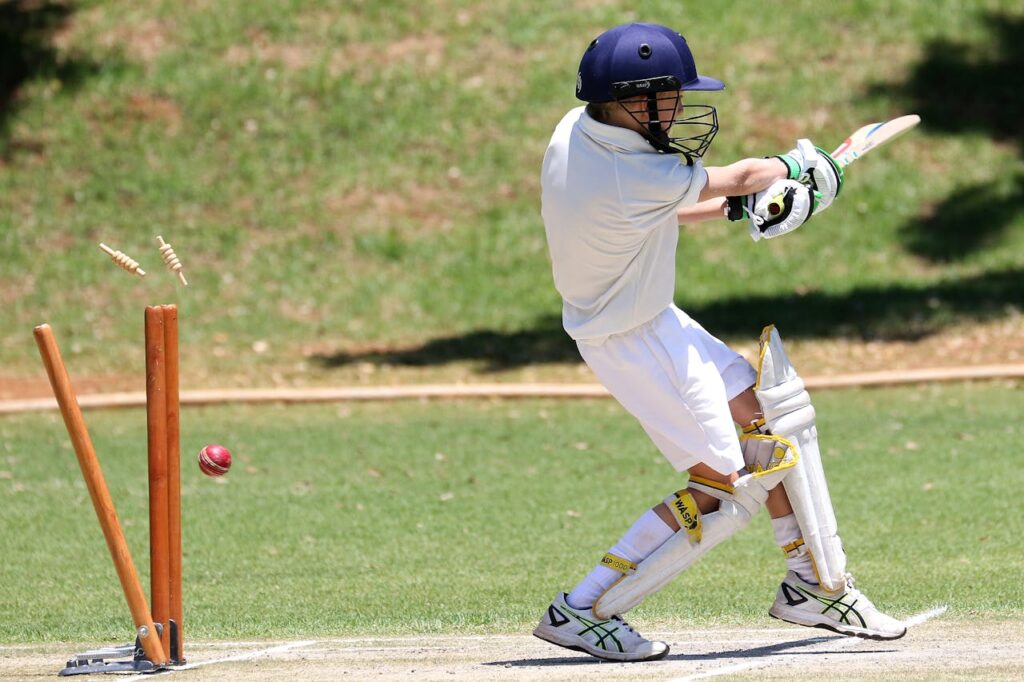

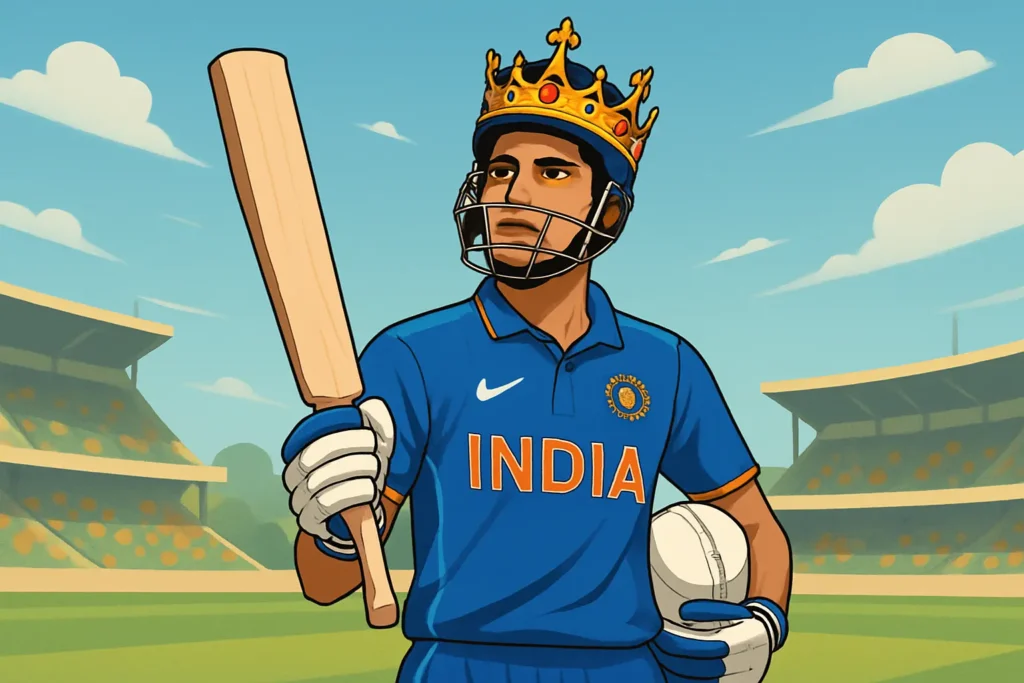
A single shot often tells you everything you need to know about a batter. For the modern cricket prince, it’s the on-the-up cover drive threaded between extra cover and mid-off, feet light, hands high, wrist soft, head still. It’s not bludgeoned; it’s announced. The bat sweeps through a beautifully held arc, the seam of the ball falls in love with the middle, and the sound carries an air of entitlement. This isn’t arrogance. It’s an insistence on elegance, and a reminder that class still has room in an age of impossible power. That’s the aura behind the phrase fans keep typing, posting, and chanting: “Prince of cricket.”
Today, when people ask who is the prince of Indian cricket, the answer leads to a young opener with old-world grace and new-age gears: Shubman Gill. The nickname didn’t arrive fully formed from a PR office. It bubbled up from the dressing room, the commentary box, the studios, the stands, and—most forcefully—the evidence of his batting. But “cricket prince” carries history too. Before Gill, there was the Prince of Calcutta—the elegant, defiant Sourav Ganguly—and further back, the silken wrists of Mohammad Azharuddin, often hailed as the Prince of Hyderabad. The title isn’t official; it’s cultural currency, passed on when a player’s style and steel meet at a standard fans hold dear.
What “Cricket Prince” Really Means
The phrase “cricket prince” works on three levels:
- Aesthetic privilege: A player who seems born to play the difficult shots easily. Think of someone who makes a good ball look like a friendly one.
- Temperament with theatre: A performer who rises in big games, understands moments, and carries an aura that settles teammates.
- Promise to ascend: The prince is not the king yet. He is the inheritor—the one who’s expected to carry the game’s lineage forward while building his own kingdom.
Modern fans invoke “prince of cricket” to juxtapose against established monikers—the King (Virat Kohli), the Hitman (Rohit Sharma), the Wall (Rahul Dravid). It’s a frame for expectation and artistry, not just numbers.
The Modern Prince of Indian Cricket: Shubman Gill
Shubman Gill’s rise has been cataloged in scorecards and short videos, but the foundation was poured long before the highlight reels. He grew up around rings of farmland and dusty pitches, where his father, Lakhwinder Singh, set exacting standards. Old coaches still tell stories of hour upon hour of technical drills where discipline mattered more than sixes. They speak about a bat-lift that was rehearsed until it felt like a reflex, about the unglamorous stuff that never trends—leaving well, resetting after drinks, watching for late swing, mid-innings recalibration.
When he burst into the national frame at the Under-19s, he looked older than his age in cricket years. Mature shot selection, ball-by-ball calculation, and the ability to summon tempo without violence—these stood out. At senior level, he took a tougher route than many white-ball prodigies do. Gill didn’t force the issue with the slog; he learned the craft of responding to different balls with different answers. The hits came anyway.
Why Is Shubman Gill Called the Prince?
There isn’t a single origin story, and that’s the point. The nickname gained traction because multiple circles arrived at the same feeling.
- Teammates and seniors admired his composure. In domestic corridors, the word used often was “sukoon” (calm). Princedom fits that serenity.
- Senior players and broadcasters began using “Prince” on air. Voices from Punjab cricket—proud of his poise—helped popularize it. The label snowballed with repeated usage across television and social media.
- The audience saw a stylist’s returns in the toughest places: tricky new-ball sessions on greenish surfaces, playoff pressure, a world final, a double-hundred in ODIs. The crown is fan-created. The supporters held it up; Gill grew into it.
- Cultural continuity. Indian cricket has always loved its aristocrats of timing and elegance—Azhar, Ganguly, Laxman. Gill looks like a modern heir to that aesthetic line, with T20 gears added. Prince became shorthand for that lineage.
A Technical Blueprint: How the Cricket Prince Builds an Innings
Setup and alignment
- Base: Compact stance, minimal early movement; strong still head.
- Pick-up: Vertical bat-lift, controlled backswing, encourages straight hitting.
- Alignment: Side-on at release, chest slightly closed, enabling late adjustments.
Scoring architecture
- Against pace: Plays late under the eyes, uses pace square of the wicket, and opens the face for third-man glide when the field sits wrong. Prefers length a touch full; drives on the up with balance.
- Against swing: Early caution with a pronounced leave; trusts a line outside off. Commits later than most to find the middle.
- Against spin: Tall at the crease, nimble on the feet. Uses a sudden skip to get to the pitch and a scything cut when bowlers drag back. The sweep is not his first port of call; the inside-out and the drop-and-run are his rhythm keepers.
Gears and tempo
- Powerplay management: Minimal risk in the air; exploits the V with a full face. The boundary ball is chosen, not manufactured.
- Middle overs: Rotates obsessively. Builds a run-a-ball foundation that doesn’t look dramatic but leaves him with a strike-rate that blooms.
- Death overs: Unfolds the levers—pickup over midwicket, high-elbow straight hit, late slice behind point. It’s calculated aggression, not chaos.
Test match temperament
- New ball: Quiet ego. Okay with a low-scoring first hour as he patterns the seam.
- Spin phases: Sweeps less than many peers but uses micro-angles to turn two into three, keeping bowlers on their heels.
- Fifth-day thinking: Plays the field, not the bowler—nudging into spaces, forcing captains to choose between a catching ring and run-stoppers.
Fielding, energy, leadership
- In the ring: Quick first step, clean gather, easy release. Saves singles that matter more than they look.
- Slip and close-in: Soft hands, alert to deviation.
- Captaincy for Gujarat Titans: Calm outwardly, data-aware, inclined to back set plans. You won’t see theatrical calls; you will see mid-over field nudges and a bowler’s best ball prioritized. He looks like a leader who works quietly on alignment—roles clear, egos parked, standards high.
Signature Matches and Why They Matter
A prince shows himself when the stage dares him to. Gill has done this repeatedly, and the specifics reveal more than averages ever could.
- The ODI double-hundred in Hyderabad: Not a slog-fest but a layered epic—laden with control early, a burst of audacity late. The hitting range grew organically; the arc didn’t change, only the bat speed did. It was a template for modern 50-over dominance.
- The Ahmedabad playoffs hundred for Titans: Pressure-drenched, against an attack that hunted powerplay wickets. Gill set up with silk and finished with steel, proof that grace does not preclude brutality.
- Test hundred against Bangladesh in Chattogram: A milestone that looked like a shrug. He occupied, he organized, and then he expanded as if flicking a switch. The shift from survival to command was clinical.
- Test hundred at Ahmedabad against Australia: Head still, hands leading, patience across spells. It put him squarely in conversations about long-term Test greatness.
- T20I hundred at Ahmedabad vs New Zealand: A statement that his T20 game is not the sum of lofted shots. The control through the first thirty balls was textbook, the tempo after fifty balls, ruthless.
Table: Shubman Gill — Signature Innings at a Glance
| Format | Opponent | Venue | Score | Why it mattered |
|---|---|---|---|---|
| ODI | New Zealand | Hyderabad | 208 | Proved he can go big without losing shape |
| IPL | Mumbai Indians | Ahmedabad (Playoffs) | 129 | Playoff temperament; timing-to-power showcase |
| Test | Australia | Ahmedabad | 128 | Patience under pressure; tempo control in long form |
| Test | Bangladesh | Chattogram | 110 | First Test ton; the switch from resilience to domination |
| T20I | New Zealand | Ahmedabad | 126* | T20 gears verified at international level |
The Royal Lineage: From Prince of Calcutta to Today’s Cricket Prince
Sourav Ganguly, the Prince of Calcutta
The phrase belonged to Ganguly long before Gill arrived. “Prince of Calcutta” was both a nod to upbringing and a frame for his style—a left-hander with a free-flowing off-side game who carried Bengali pride and national ambition on the same shoulders. He forced India to strut, not shuffle, in away conditions. His off-side authority made bowlers bowl where he wanted; his captaincy moved India from hesitant to confrontational.
Why the title fit:
- Aesthetic sovereignty: The off-side play defined a generation. Bowlers knew it. He didn’t care.
- Leadership theatre: Fielding changes that looked like chess moves, fronting storms with an unblinking stare.
- Narrative moments: The shirt wave on a famous English balcony is folklore. It wasn’t about bravado; it was a rupture in the old order.
Mohammad Azharuddin, the Prince of Hyderabad
Some nicknames attach themselves quietly. Azhar rarely needed the spotlight to be on him; the wrists did the talking. His flick through midwicket felt predetermined by fate. Elegance is a tired word in cricket writing, but Azhar reclaimed it every time he turned a seeming dot into a boundary behind square. For many Indian fans, he was the earlier symbol of aristocratic strokeplay. “Prince of Hyderabad” was whispered with affection, not publicized to override others.
Yuvraj Singh: The Literal Prince
“Yuvraj” literally means prince. For a generation, he was the poster of power with poetry—the six-sixes maverick, the World Cup hero, the left-hander who could change the energy in a ground simply by walking past square leg. Fans occasionally conflate the moniker with him because of the name itself. In usage, though, the “prince of Indian cricket” label today usually points to Gill’s aesthetic-and-temperament combination, while Yuvraj’s legend stands as a separate force of nature.
Who Is the Prince of Cricket Today?
Short answer: Shubman Gill is the prince of cricket in the present conversation, and he is widely hailed as the prince of Indian cricket.
Long answer: Nicknames evolve, and the title is earned by what a player does when nothing but their best will do. Gill’s mix—class, calm, and high-ceiling consistency—has made the label feel obvious. The crown, of course, is metaphorical. But if you ask the terrace, the studio, and the single-screen TV in a small-town chai shop, it’s the same name.
Shubman Gill vs The World: Comparisons That Define a “Prince”
Prince vs King: Gill and Virat Kohli
Kohli’s nickname is not an accident. He built a fiefdom through chase mastery, obsession with fitness, and an intensity that refused to blink. Gill’s brand of dominance is quieter. He wears the same shirt without the same snarl, letting rhythm, not rage, lead.
- Technique: Kohli’s bottom-hand control and mid-wicket engine create a different scoring map. Gill lives earlier in the ball’s life—under the eyes, with a gentler release—and leans more on the V.
- Mentality: Kohli attacks the moment’s throat; Gill talks it down. Both are assassins in chases, one with fire, one with silk.
- Field setting response: Kohli forces captains to protect mid-wicket and cover the angle; Gill forces them to defend the true V and the late dab, widening gaps on either side.
Gill vs Babar Azam: The Cover-Drive Derby
People love to argue about whose cover drive is the purest. It’s a delightful debate because both are sublime.
- Set-up and shoulder line: Babar holds a stronger side-on shape with a slightly more pronounced lean into the stroke. The bat arrives flatter and later, presenting a painter’s brush. Gill lifts high and stays tall, finishing upright, giving the shot a lifted quality even when it stays grounded.
- Risk profile: Both pick the ball length early, but Gill often plays on the up; Babar loves that half-volley feel. Gill’s margin for error is smaller, Babar’s feel is silkier. On a green seamer with bounce, Gill’s height through the ball can be a shield. On low skidders, Babar’s lean is a cheat code.
Gill vs Rohit Sharma: Handling the New Ball
Rohit disarms with time. He lets the ball arrive and uses late hands to send it where fielders aren’t. His power is deceptive; his sixes carry like paper planes that never descend.
- New-ball method: Rohit can survive a probing first spell by absorbing maiden after maiden, then exploding. Gill mixes leaves and singles, aiming to keep both bowlers and scoreboard moving.
- Scoring arcs: Rohit’s pull is a weapon-of-choice; Gill’s straight bat is a hymn. Both can brutalize after set, but the aesthetics differ.
Records and Milestones: What the Prince of Indian Cricket Has Already Shown
Gill’s tally changes with every series, but several landmarks have reshaped expectations:
- Century in each international format: A statement of all-conditions, all-tempo ability.
- ODI double-hundred: Mastery over tempo and death overs; proof that big numbers can be built without ugly strokes.
- Run machine in an IPL season: A campaign where he led the run charts and turned contests on their head in the playoffs.
- Big-match temperament: Key knocks in playoffs and high-voltage series; early signs of a player who sees pressure as a frame, not a weight.
- Leadership at franchise level: Taking over as Gujarat Titans captain and steering with calm control—polite with the mic, precise with fields, direct with bowlers.
How Bowlers Try to Unseat the Prince
Every monarchy faces a rebellion. The best attacks have challenged Gill deliberately.
- Full and wide early: Target the drive with swing away to tease the edge. Gill’s answer is to leave with discipline. When he drives on the up, the line must be pristine. He increasingly refuses the bait.
- Hard length at the hip bone: Aim for the indecision channel, between pull and fend. Gill’s solution is a vertical bat and a roll of the wrists. When pitches misbehave, he bruises rather than blazes.
- Off-spin into the rough outside off: Packed off-side ring, force the inside-out chip. Gill resists by playing later and trusting the straight bat down the ground.
- Wrist-spin with leg-side trap: Invite the big slog-sweep. Gill often goes inside-out and uses the single to long-off to defuse the trap until the bowler’s length collapses.
- Bouncer barrage with fine-leg up: Test the top-hand. Gill’s pull is not ferocious by default, but he has learned to climb into the short ball with a pick-up carry over square leg, sometimes with a rolling forearm to keep it lower.
IPL and the Prince Persona
T20 cricket tests a batter’s honesty. Can you accelerate without premeditation? Can you read matchups without losing shape? Gill’s IPL rise showed a player who trusted his strokes and his reading more than raw muscle.
- Powerplay: Finds two fours in an over without trying for the third. The economy of risk is the plan.
- Middle overs: Not a dot merchant. He flips singles off good-length balls, which forces captains to pick poison—protect the boundary and concede rotation or squeeze singles and give him the width he wants.
- Death phase: The high elbow turns violent. He goes straight first, angles later. The loft is a straight-line extension of his drive, not a different stroke. When he’s really on, the inside-out over cover is the showpiece.
- Captaincy: As a leader, he reads matchups well—using spinners for wider lines to left-handers on big-square boundaries, or saving a deck-hitting seamer for the overs after time-out when batters feel compelled to go. His calm was tested in tight chases; he looked unflustered more often than not.
A Note on the Phrase “Cricket Prince” as a Brand
Some searchers may be looking for a channel or brand called “Cricket Prince.” That’s a different entity from the nickname. This guide focuses on the moniker used for players—most commonly Shubman Gill in current usage.
Nicknames in Indian Cricket: Why the “Prince” Sticks
The Indian cricketing imagination loves titles. The King, the Hitman, the Wall, the Turbanator—the lexicon is a fandom’s love letter to narrative. “Prince” works because it’s a promise. It says more is coming, that the shape is visible but the statue is unfinished. It suggests class not as a luxury but as a principle.
Ganguly’s “Prince of Calcutta” explained why his batting felt like a legacy—a sense of inherited right to rule on the off side. Azhar’s “Prince of Hyderabad” captured an aristocratic flair. Gill’s “prince of Indian cricket” feels like the baton being passed to a different kind of ruler: data-literate, technically pure, and power-aware without being power-drunk.
Shubman Gill’s Game, Layer by Layer
Opening in Tests
- First 20 balls: Risk minimal, leaves pronounced. Looks to get past the first seam burst with soft hands.
- Between 20-60 balls: Begins feeding the off-side fielders with low-risk punches, forcing captains to adjust. Once mid-off goes back, he’s happy to pick singles through cover.
- After 60 balls: Uses inside-out versus spin, and on slow surfaces, trusts the straight bat through the line. If a left-arm spinner drags shorter, the square cut becomes a pressure valve.
ODIs: The New-Modern Template
- Entry plan: Averages built on light feet and gaps, not just heavy bats. The first phase prioritizes strike rotation to guard against collapses.
- Middle expansion: Two options—attack the weaker spinner with early footwork or ride out the best bowler and cash in later. He often chooses correctly by reading pitch behavior.
- Death execution: Switches to high value zones—long-on, long-off, deep cover. Keeps the leg-side pickup for balls on the hip; avoids slogging across the line unless conditions dictate.
T20Is: Controlled Chaos
- Anchor-plus: Functions as a classical anchor who can end at a strike-rate taller than the scoreboard expected. Enables a hitter at the other end to stay within boundaries while he moves the chase forward.
- Matchups: Rarely hits with spin away from the turn early; waits for the ball that enters the arc. When seamers go cross-seam into the pitch, he steps inside the line and uses a flat-bat over midwicket rather than a full slog.
Fitness and fielding
- The modern prince cannot be a passenger in the field. Gill’s quickness and hands are part of his batting aura; he saves eight to ten runs on a good night. That matters as much as an extra boundary.
How the Title Travels Across Languages and Regions
The nickname is not confined to English. In living rooms and gullies, it moves in many tongues:
- Hindi: “Cricket ka prince kaun hai?” Answer: “Shubman Gill ko log Indian cricket ka prince kehte hain.” Also: “Shubman Gill ko ‘Prince’ kyun kehte hain?” Answer: “Unki class, temperament, aur big-match batting ki wajah se.”
- Bengali: “ক্রিকেটের প্রিন্স কে?” Answer: “শুভমান গিলকে অনেকেই ক্রিকেটের প্রিন্স বলে।”
- Urdu: “کرکٹ کا پرنس کون ہے؟” Answer: “لوگ شوبمن گل کو انڈین کرکٹ کا پرنس کہتے ہیں۔”
- Malayalam: “ക്രിക്കറ്റിന്റെ പ്രിന്സ് ആര്?” Answer: “ഷുബ്മാന് ഗില്ലിനെ പലരും പ്രിന്സ് എന്ന് വിളിക്കുന്നു.”
- Kannada: “ಕ್ರಿಕೆಟ್ ಪ್ರಿನ್ಸ್ ಯಾರು?” Answer: “ಶುಭ್ಮನ್ ಗಿಲ್ರನ್ನು ಅನೇಕರು ಪ್ರಿನ್ಸ್ ಎನ್ನುತ್ತಾರೆ।”
Romanized variants common in search:
- cricket ka prince kaun hai
- shubman gill ko prince kyu kehte hain
- shubman gill prince meaning in hindi
These phrases travel fast because they’re easy to type and carry the same feeling—affection plus expectation.
FAQs: Clear Answers to Common “Prince of Cricket” Questions
Who is the prince of cricket?
Shubman Gill is widely referred to as the prince of cricket in current discourse, especially within India.
Who is the prince of Indian cricket?
Shubman Gill. The title reflects his aesthetic style, high ceiling, and calm temperament across formats.
Why is Shubman Gill called the prince?
Because he marries classic technique with modern scoring gears and delivers in high-pressure moments. Broadcasters and fans amplified the label after a series of standout innings across formats and the IPL.
Who gave Shubman Gill the nickname “Prince”?
No single source owns it. The nickname gained currency through a mix of teammates, senior cricketers on television, and fans on social media. It stuck because his batting validated it.
Is Sourav Ganguly also called the prince?
Yes—Sourav Ganguly is famously known as the “Prince of Calcutta,” a title tied to his style, leadership, and Kolkata heritage.
What does “Prince of Calcutta” mean?
It’s an affectionate moniker for Ganguly, celebrating both his origin and his sense of batting royalty—especially the off-side game that defined a generation.
Is “Prince of Hyderabad” used for Azharuddin?
Yes, many fans and writers refer to Mohammad Azharuddin as the Prince of Hyderabad, acknowledging his wristy elegance.
Is Shubman Gill the current prince of Indian cricket?
Yes. In the present conversation, the tag belongs to Gill.
Why not call him king already?
Monarchies in cricket are earned over long stretches. King implies a completed legacy. Prince acknowledges excellence today and the promise of an even larger reign tomorrow.
Shubman Gill’s Records and Highlights: Context Over Count
Cricket is an ocean of numbers, but the right ones carry context:
- International hundreds across formats: Confirms adaptability and skill transfer.
- ODI double-hundred: Proves he can scale to rare heights without sacrificing shape.
- Consistency in a run-glut IPL season: Demonstrates a sustained tempo across diverse conditions.
- Playoff masterclass with Titans: Shows that pressure shapes him rather than crushes him.
- International T20 ton of high quality: Confirms the upper gear exists without resorting to slogging.
If you collect photos or clips, look for:
- Cover-drive slow motion: High elbow, hands in front of pad, body still at contact.
- Inside-out loft over cover vs spin: Early feet, late wrists.
- Playoffs hundred for Titans: Bat speed exploding late without losing the straight arc.
- ODI double: Phases of accumulation, then expansion; death overs with clean arcs down the ground.
An Expert’s View on Weaknesses and Growth
Even princes have blind spots.
- Fifth-stump temptation early: Outswingers on a good length can nag him into flirting too soon. His improvement shows in a more stubborn leave.
- Hard bouncer bodyline: Attacks the top hand. He counters with roll-over pulls and selective picks. The full-blooded pull still develops with each season.
- Slow two-paced pitches: Occasionally, the gear shift takes a beat longer. The counter is a more proactive shuffle at the crease—he’s employing it more often now.
- Over-attacking spin early: Rare, but when he tries to boss the spinner the moment he’s in, miscues creep in. Best Gill is patient Gill; when he trusts the single, a big shot arrives safer two overs later.
Leadership: The Prince’s Way
Not every great batter makes a leader, but Gill’s profile suggests a captain who speaks fluent tactics.
- Bowling plans: Encourages deck-hitters to aim into the hip against hitters who clear the front leg; prefers wide lines with protection on big squares versus left-handers.
- Fielding sanity: Rarely over-defensive. Keeps a catching man where the wicket is possible, for longer than many captains would.
- Player management: Calm communication suits IPL’s mismatched rhythms—overseas arrivals, domestic youngsters, fluctuating forms. He looks like a captain who trusts role clarity over rollicking speeches.
Cultural Footprint: Why “Prince of Cricket” Feels Right
The prince is a mood as much as a metric. When Gill walks out, there is an immediate hush in stadiums, not out of uncertainty, but of expectation. He compels higher silence. When he middle-middles his first drive, the sound is enough to switch on TV volumes in living rooms across the country.
That’s not only about runs. It’s about the inheritance of style. Cricket’s romance has always included a space for aristocrats—the ones who seem to know something about the ball’s future that others don’t. Gill fits that archetype, but he’s also unequivocally modern. He reads matchups, leans on databases, and calibrates. The old-world romance now runs on spreadsheets too; the prince learns both languages.
A Quick Guide to Phrasing and Meaning in Searches
- who is the prince of cricket, who is the prince of Indian cricket, cricket prince: Usually intended for Shubman Gill.
- prince of calcutta meaning: Refers to Sourav Ganguly’s nickname.
- shubman gill prince: Searchers want highlights, explanation of the nickname, and records.
- why is shubman gill called prince: Intent focuses on origin stories and signature innings that justify the title.
- cricket nicknames list (prince, king, hitman, wall): Broader curiosity about how monikers map to styles and legacies.
Gill’s Place in India’s Batting Tree
Imagine a batting lineage, not strictly by runs, but by feel:
- Sunil Gavaskar: Technical monasticism; the art of leaving.
- Mohammad Azharuddin: Wristed nobility; angles beyond geometry.
- Sourav Ganguly: Off-side aristocracy; leadership with theatre.
- VVS Laxman: Trance-like shotmaking; wrists and quiet rescue acts.
- Virat Kohli: All-format intensity; chasing as a craft.
- Rohit Sharma: Time as a weapon; effortless power.
- Shubman Gill: Poised modern classicist; timing first, gears ready.
No lineage is perfect. It’s a sketch, a romantic essay. But Gill’s name sits there comfortably. He carries slices of each predecessor, with enough originality to draw his own line.
The “Versus” Era and Why Gill Thrives in It
Contemporary cricket is a never-ending comparison engine: Gill vs Babar, Gill vs Kohli, Gill vs anyone who plays a cover drive on a Tuesday. Gill thrives by refusing to perform for the comparison. His batting never looks rushed into a narrative. That detachment is a hallmark of future greats. He plays his ODI innings like a Test opener who has discovered how to end at a 130-plus strike-rate without noticing the speedometer. He plays T20 like a musician who knows the crowd wants the chorus, but still builds the verse.
The Responsibility of a Title
Princes don’t get days off from scrutiny. Every lean patch becomes a referendum; every edge becomes a mood swing. Gill has handled dips with minimal noise. He tinkers, trusts the process, and returns with a small adjustment you only notice if you hunt for it—the timing of the trigger movement, the bat coming down a shade closer to the pad, the decision to premeditate once in an over rather than once in a spell.
That’s what convinces teammates and coaches. Convincing fans is almost a byproduct. The title “prince of cricket” is a promise, not a victory lap. Gill seems to get that.
A Short, Honest List: What Makes the Prince Different
- He scores pretty runs that matter. The aesthetics do not come at the cost of impact.
- He reads the bowler’s intention early, then respects the ball that deserves it.
- He builds innings with singles that don’t look like much and ends with sixes that don’t look like effort.
- He gives captains nightmares in field settings—protect the straight hit and he late-glides; close third man and he opens the bat face; stay on the stumps and he flows straight.
- He has the leadership gene—calm presence, low-drama corrections, and consistent tactical shapes.
Shubman Gill vs Babar Azam: Deeper Technical Notes on the Cover Drive
- Base and balance: Gill’s base is a tad wider early, stabilizing the on-the-up drive. Babar prioritizes a closed shoulder alignment, extracting full-face contact a beat later.
- Hands and wrists: Gill’s hands travel in a longer ellipse, finishing high; Babar’s wrists stay silk-soft, letting the bat flow diagonally with less follow-through height.
- When it breaks down: For Gill, the miscue comes when he reaches for the ball that isn’t full enough. For Babar, it’s when the seam wobbles late and the bat arrives a shade early due to the lean.
- Field response: Against Gill, you’ll see a fuller ring at short cover and a deep extra; against Babar, teams often trial a straighter mid-off and a catching cover, gambling on the lean.
The Prince and the Big Stage
He has already tasted high-stakes finals and playoff nights where the first ten balls can define a career. Some went his way, some didn’t. What matters is that his method stays intact under lights, against the best, when the new ball hums. That is a royal trait: the refusal to let the big stage distort your shapes.
What the Future Demands
The crown of “prince of Indian cricket” carries responsibilities.
- Test cricket away from home: Big runs on seaming tracks will harden the legacy. He has the alignment and patience; extended purple runs abroad will turn belief into inevitability.
- ODI mastery in sticky chases: Keeping the tempo alive on slow pitches with two slow bowlers strangling you is the next big mountain. He has shown he can do it; stacking these nights matters.
- T20 finishing: As his role evolves between anchor and aggressor, pushing a finishing skill set without losing elegance will be the art.
- Captaincy depth: In big tournaments, he’ll face tactical traps set by veterans. The best captains learn to break patterns before opponents read them. Gill has the temperament; experience will add tricks.
A Living FAQ for Regional Fans
- क्रिकेट का प्रिंस कौन है: शुबमन गिल को लोग इंडियन क्रिकेट का प्रिंस कहते हैं.
- क्रिकेट के प्रिंस का मतलब: क्लास, टेंपरामेंट, और बड़ा मंच—इन सबका संगम.
- ক্রিকেটের প্রিন্স কে: শুভমান গিল.
- کرکٹ کا پرنس کون ہے: شوبمن گل.
- cricket ka prince: common shorthand online for Shubman Gill.
Cricket Nicknames: The Wider Family
- King of cricket: Often used for Virat Kohli, acknowledging run-chase mastery and longevity.
- Hitman: Rohit Sharma—the smoothest six-hitter of his era.
- The Wall: Rahul Dravid—technique and temperament resistant to any weather.
- Prince of Calcutta: Sourav Ganguly—off-side royalty, captain with a taste for confrontation.
- Prince of Hyderabad: Mohammad Azharuddin—wrists that rewrote fielding charts.
Together, these nicknames are not just labels. They are compressed essays on each player’s aesthetic and impact.
A Final Word: Why the “Prince of Cricket” Captures This Moment
The game evolves; the romance remains. Batting will keep finding new muscles, formats will ask for faster answers, analytics will cut weaker strokes out of existence. But there will always be space for a batter whose first instinct is to find the middle with a full face and to make the ball obey angles you can’t draw on a whiteboard.
Shubman Gill feels like that batter for this generation. He isn’t a throwback, nor a slave to modernity. He stands in the seam between both worlds and makes it look easy. The crown fans offer him—prince of cricket, prince of Indian cricket—isn’t a souvenir. It’s a reminder. Elegance still wins, even in a world of chaos. And when elegance learns aggression without losing itself, you don’t just get a nickname. You get a standard.
If you came searching for who is the prince of cricket, you already know the name. Watch the first over he plays on a good day. The drive will arrive. The sound will tell you the rest.